







What Does BESS Asset Availability Mean for C&I Energy Storage Projects
Release time: 2026-09-14
Table of Contents
In 2026, Commercial and Industrial (C&I) energy storage has officially transitioned from an experimental backup solution to a central pillar of corporate energy strategy. Driven by grid volatility, rising demand charges, and aggressive decarbonization targets, businesses are deploying Battery Energy Storage Systems (BESS) at an unprecedented rate. However, as the financial exposure tied to these systems increases, a critical metric has taken center stage in boardrooms and engineering departments alike: BESS Asset Availability.
Historically, buyers evaluated storage assets based on a single, oversimplified uptime percentage. Today, sophisticated C&I operators realize that a battery can be “online” but entirely unable to discharge power when a peak demand event occurs. Understanding the true meaning of BESS asset availability is the difference between achieving a five-year Return on Investment (ROI) and suffering continuous financial losses.
This article deconstructs the concept of BESS asset availability, explores why it is the most critical metric for C&I projects, and examines how the latest 2026 policy regulations are reshaping performance guarantees and asset management.
Deconstructing BESS Asset Availability: Beyond Simple Uptime
In legacy power generation, availability simply meant whether a generator was turned on and ready to produce electricity. BESS availability is inherently more complex. A battery is an energy-limited resource; its ability to perform depends not only on the health of its hardware but also on its State of Charge (SoC), thermal conditions, and control architecture.
To accurately capture project risk, modern C&I operators have adopted a multi-dimensional framework often referred to as Overall Battery Effectiveness (OBE). This framework breaks asset availability into four distinct metrics:
1. Equipment Availability
Equipment availability answers the simplest question: Is the system physically online? It measures the percentage of time the BESS is free from hardware faults, communication losses, or preventative maintenance shutdowns. While foundational, equipment availability is an incomplete metric; a BESS can have 100% equipment availability but still fail to deliver power if the battery is depleted.
2. Operational Availability
Operational availability tracks whether the system is actively responding to the Energy Management System (EMS). In C&I applications, the BESS must react within milliseconds to load spikes or grid signals. If the system is online but locked in a protective “idle” state due to sensor calibration drift, it is operationally unavailable.
3. Power Availability
Power availability measures the system’s capacity to deliver its full nameplate power rating (measured in kW or MW) at any given moment. Factors such as cell imbalance, inverter derating due to high ambient temperatures, or internal resistance growth can artificially cap a system’s power output. For instance, if a 500 kW system can only safely discharge at 400 kW to prevent thermal runaway, its power availability is severely compromised.
4. Energy Availability
Energy availability defines whether the expected capacity (measured in kWh or MWh) is actually deliverable. Because lithium-ion batteries degrade over time, a system that originally stored 1,000 kWh may only yield 850 kWh by year three. Furthermore, hidden SoC estimation errors can create “phantom capacity,” where the Battery Management System (BMS) overestimates available energy, leading to premature shutdowns during dispatch.
The Four Dimensions of BESS Availability
| Availability Metric | What It Measures | Common Causes of Downtime / Derating | Impact on C&I Projects |
| Equipment | Hardware uptime (%) | Inverter faults, grid outages, cooling system failures. | Total loss of revenue streams during the outage window. |
| Operational | EMS responsiveness | Communication lag, BMS software lockouts, manual overrides. | Missed demand response dispatches; failed grid sync. |
| Power (kW) | Discharge rate capacity | Thermal derating, cell imbalance, PCS degradation. | Inability to fully shave a sharp demand peak. |
| Energy (kWh) | Deliverable duration | Cell degradation, SoC calibration drift, depth-of-discharge limits. | System depletes before a sustained peak period ends. |
Why Asset Availability Dictates C&I Financial Performance
For utility-scale projects, availability affects grid-level power purchase agreements. For C&I facilities, the financial stakes are highly localized and immediately visible on monthly utility bills. C&I energy storage revenue streams are heavily concentrated, meaning a single availability failure can wipe out a month’s worth of savings.
Demand Charge Management
Demand charges—fees based on a facility’s highest 15-minute interval of power usage during a billing cycle—can account for up to 50% of a commercial electricity bill. A C&I BESS is programmed to monitor facility load and discharge power to “shave” these peaks. If a BESS suffers a drop in Power Availability during the facility’s single highest peak of the month, the peak goes unshaved, the demand charge is triggered, and the financial value of the BESS for that entire month is lost.
Time-of-Use (TOU) Arbitrage and Solar Shifting
Many C&I sites pair BESS with rooftop solar. The battery charges during the day when solar is abundant (and cheap) and discharges in the evening when utility TOU rates skyrocket. This requires high Energy Availability. If degradation or thermal constraints reduce the system’s deliverable kWh, the business is forced to purchase expensive grid power during peak evening hours, destroying the projected Levelized Cost of Storage (LCOS).
Unplanned Outages and Production Losses
Beyond bill optimization, C&I batteries provide critical backup power. For manufacturing facilities, data centers, and cold-storage logistics, power quality disturbances cost tens of thousands of dollars per minute. In these scenarios, Operational Availability must be guaranteed at 99.9% to ensure seamless transition to island mode during microgrid operation.
The 2026 Policy Landscape: Tax Credits and Compliance Directives
The legislative environment in 2026 has radically altered how C&I projects are financed and built. The integration of stringent domestic content rules and extended tax runways requires developers to maintain strict availability records to satisfy tax-equity investors.
The Section 48E Investment Tax Credit (ITC) Extension
Under the 2026 regulatory framework, particularly following the implementation of the One Big Beautiful Bill Act (OBBBA), standalone solar and wind face steep incentive phase-outs. However, BESS and Solar-plus-Storage setups enjoy a prolonged runway. Energy storage qualifies for the full Section 48E Investment Tax Credit through 2033, allowing C&I developers to claim a base 30% credit, with stackable bonuses (Domestic Content, Energy Communities) pushing potential credits up to 50-60%.
To monetize these credits, third-party financiers demand rigorous Performance Guarantees. If a BESS asset fails to maintain a weighted availability threshold (typically 95% to 98%), the project developer may face severe liquidated damages, threatening the financial architecture of the ITC deal.
FEOC Compliance and Supply Chain Availability
Starting in 2026, the Foreign Entity of Concern (FEOC) rules actively dictate project eligibility. For an energy storage system to retain its ITC eligibility, it must meet the Material Assistance Cost Ratio (MACR) threshold. In 2026, this dictates that at least 55% of the system’s cost must not be sourced from or controlled by a FEOC.
This policy directly impacts equipment availability. C&I operators can no longer rely on ultra-cheap, unvetted foreign replacement parts for their systems. Sourcing compliant spare parts (inverters, HVAC units, battery modules) requires strategic supply chain management. If a BESS goes offline and FEOC-compliant replacement components face a 6-month lead time, the asset’s yearly equipment availability will plummet.
2026 U.S. BESS Regulatory & Tax Framework
| Policy / Regulation | 2026 Mandate | Impact on C&I BESS Asset Availability |
| Section 48E ITC | Full 30% base credit preserved through 2033. | Financiers require strict 95%+ availability guarantees to underwrite the tax equity. |
| FEOC Compliance | 55% minimum non-FEOC MACR threshold. | Limits cheap foreign spare parts; requires domestic O&M pipelines to minimize downtime. |
| UL 9540 / NFPA 855 | Strict thermal runaway and enclosure standards. | Systems must utilize intelligent BMS and IP54+ enclosures to prevent safety-related availability losses. |
Technological Solutions: Securing High Availability in 2026
Achieving a 98% Overall Battery Effectiveness (OBE) is no longer accomplished through periodic manual inspections. The industry standard has shifted toward proactive, data-driven asset stewardship.
AI-Powered BESS Analytics
C&I operators are rapidly adopting cloud-based analytics engines that ingest module-level data. By tracking voltage dispersion, coulombic efficiency, and thermal gradients during rest periods, AI systems can predict cell degradation patterns 8 to 12 weeks before they cause a failure. This transforms unplanned downtime (which hurts availability) into scheduled maintenance.
Advanced Enclosures and Thermal Management
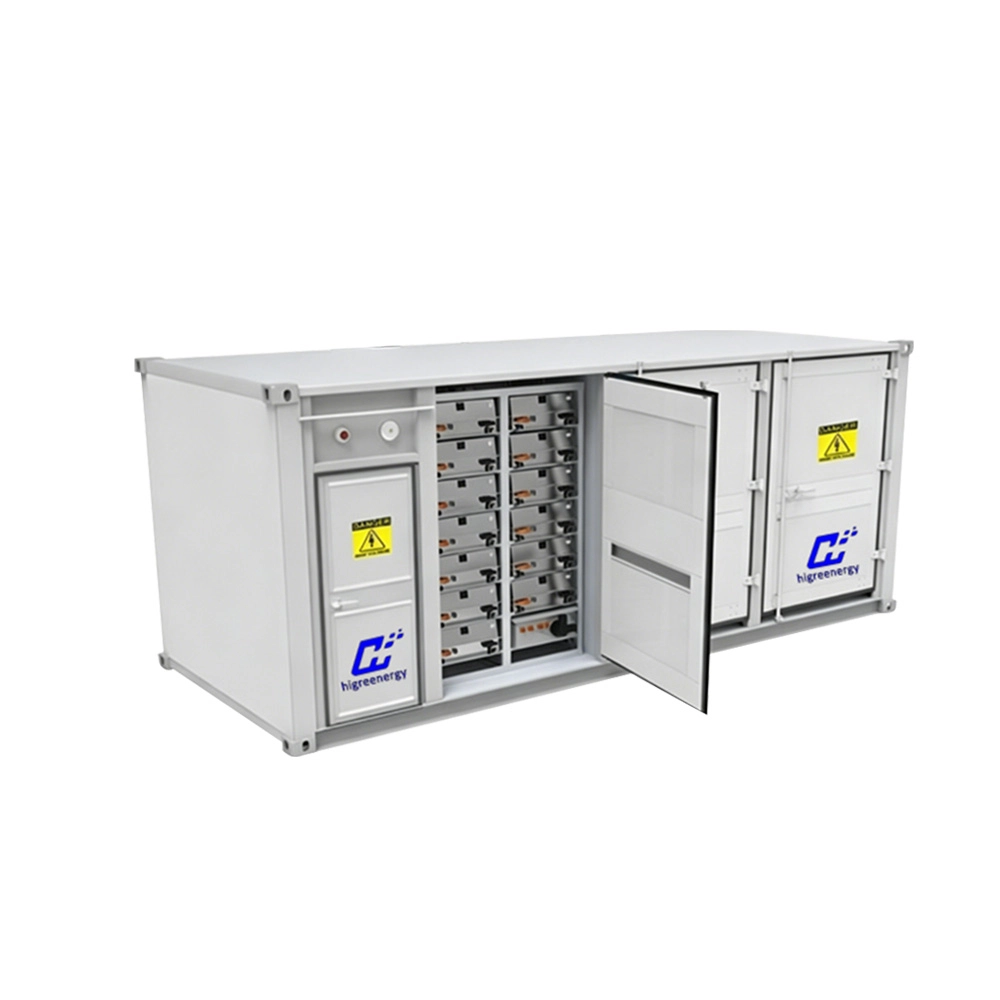
Hardware durability is the bedrock of asset availability. C&I systems are often placed in harsh environments—factory rooftops, dusty agricultural lots, or coastal shipping ports. Relying on basic cabinets leads to thermal throttling and moisture ingress. In 2026, IP-rated enclosures (IP54 for indoor/controlled environments, IP65-IP67 for outdoor microgrids) are mandatory. Furthermore, liquid cooling systems have largely replaced forced-air systems in systems over 500 kWh, ensuring uniform cell temperatures and preserving Power Availability during heavy charge/discharge cycles.
Conclusion
BESS asset availability is the most consequential metric in the commercial and industrial energy storage market. As projects scale and the 2026 regulatory environment incentivizes heavily optimized, domestically sourced infrastructure, “uptime” is no longer enough. By actively managing equipment, operational, power, and energy availability, C&I operators can protect their tax credits, maximize their demand charge savings, and ensure their facilities remain resilient in an increasingly volatile energy landscape.
Higre Energy Solution – Higre ESS Stor
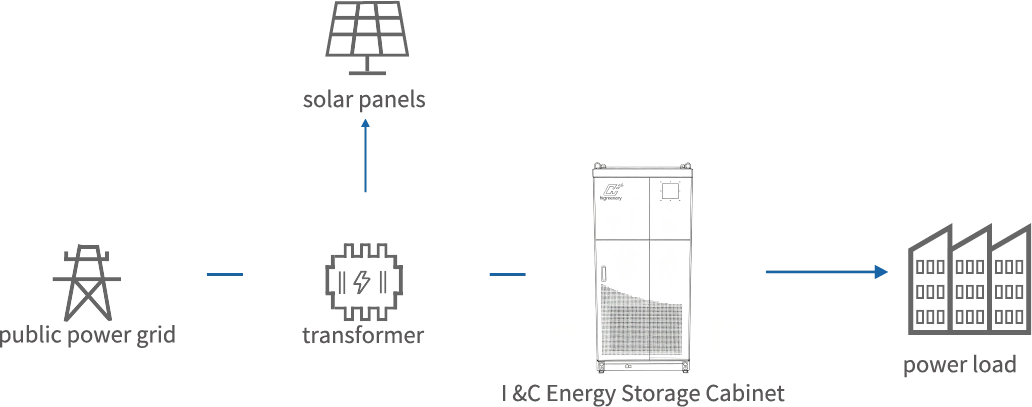
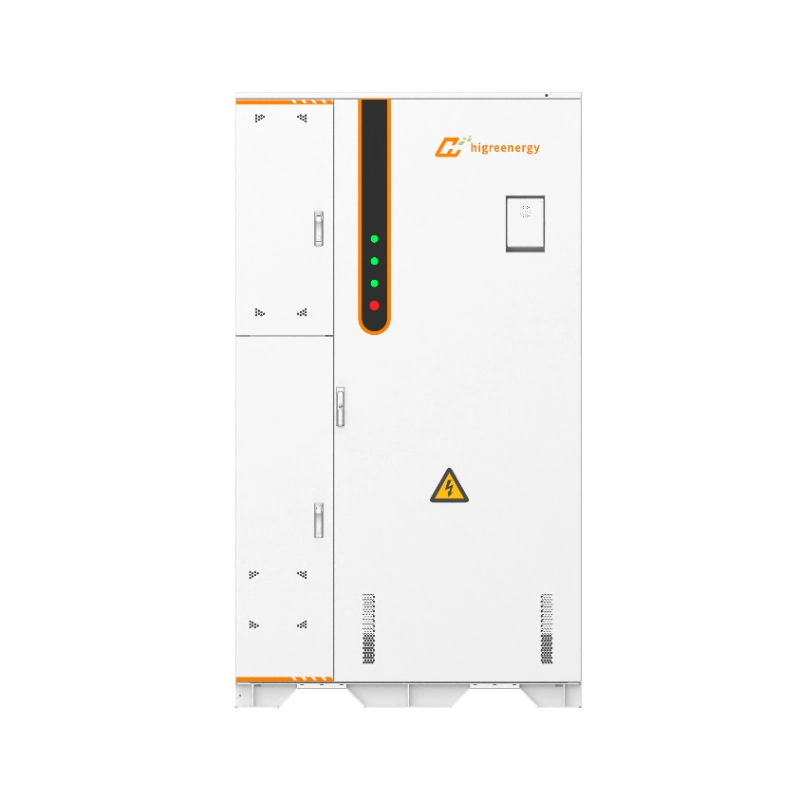
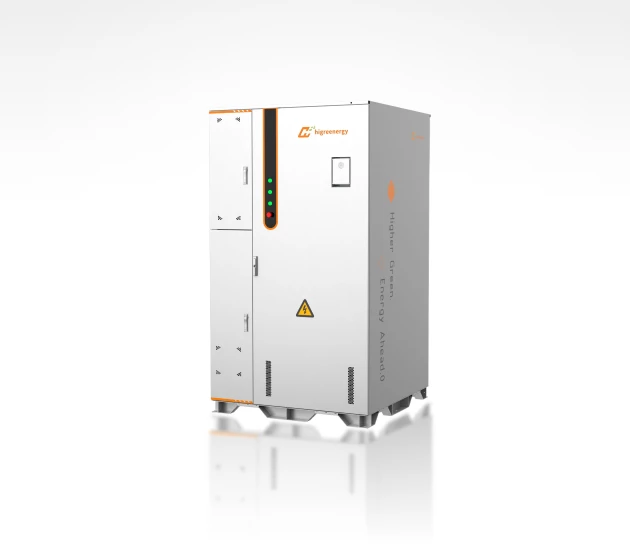
The HGES Stor 261 is a compact, scalable commercial battery energy storage cabinet designed to reduce electricity costs, manage peak demand, and maximize renewable energy utilization. Equipped with advanced lithium technology, an intelligent BMS, and robust safety features, it delivers reliable backup power and energy resilience for commercial and light industrial facilities, whether deployed as a standalone unit or integrated into solar-plus-storage systems.
Key Features Ensuring High Asset Availability:
- 261kWh Capacity: Optimized for commercial energy savings.
- Liquid Cooled: Enhanced efficiency and 8,000+ cycle life.
- -35°C to 55°C Operation: Built-in self-heating for extreme weather.
- Smart BMS: Real-time system monitoring (SOC/SOH).
- Ultimate Safety: Integrated fire & thermal protection.
- IP55/IP67 Rating: Rugged outdoor-ready enclosure.
Partner with Higre Energy to secure the technology necessary to exceed performance guarantees and maximize your energy storage ROI.
FAQs
How is weighted BESS availability actually calculated for a C&I project?
Weighted availability goes beyond simple time-based uptime. It calculates the available power at each measure of time and divides it by the system’s nominal power rating. For example, if a 1,000 kW system is online for 100% of the month, but due to thermal derating it can only discharge a maximum of 900 kW, its weighted power availability is 90%. This metric gives operators a true snapshot of functional performance.
What happens to my 2026 ITC tax credit if my BESS suffers severe downtime?
The IRS Investment Tax Credit (ITC) under Section 48E is claimed based on the capital cost of the equipment placed in service, not its ongoing performance. Severe downtime will not cause the IRS to “claw back” your tax credit. However, if your project was financed through a third-party tax equity investor, your contract likely includes performance guarantees. Severe downtime will trigger liquidated damages or default clauses within your financial agreements, destroying the project’s economic viability.
If FEOC regulations restrict foreign parts in 2026, how will that affect my BESS maintenance and uptime?
The 2026 requirement dictating a 55% non-FEOC Material Assistance Cost Ratio means you cannot rely on prohibited foreign supply chains for cheap, immediate replacement parts if doing so alters your system’s compliance status. To maintain high asset availability, C&I operators must partner with O&M providers who hold domestic stockpiles of compliant spare parts, or invest in modular systems where individual strings can be bypassed and repaired without taking the entire container offline.
References
- Energy Tax Credits After OBBBA: What You Need to Know, Wipfli Financial Insights, Aug 2026.
- FEOC Compliance for Battery Energy Storage: 2026 ITC Eligibility, EticaAG Regulatory Reports, 2026.
- Introduction to BESS Availability Calculations (OBE Framework), Librenergy Performance Engineering, 2026.
- How to Size C&I Battery Storage in 2026 (15-Minute Load Data Guide), PVB Storage Analytics, Jan 2026.