







Liquid-Cooled PCS vs. Air-Cooled
Release time: 2026-07-20
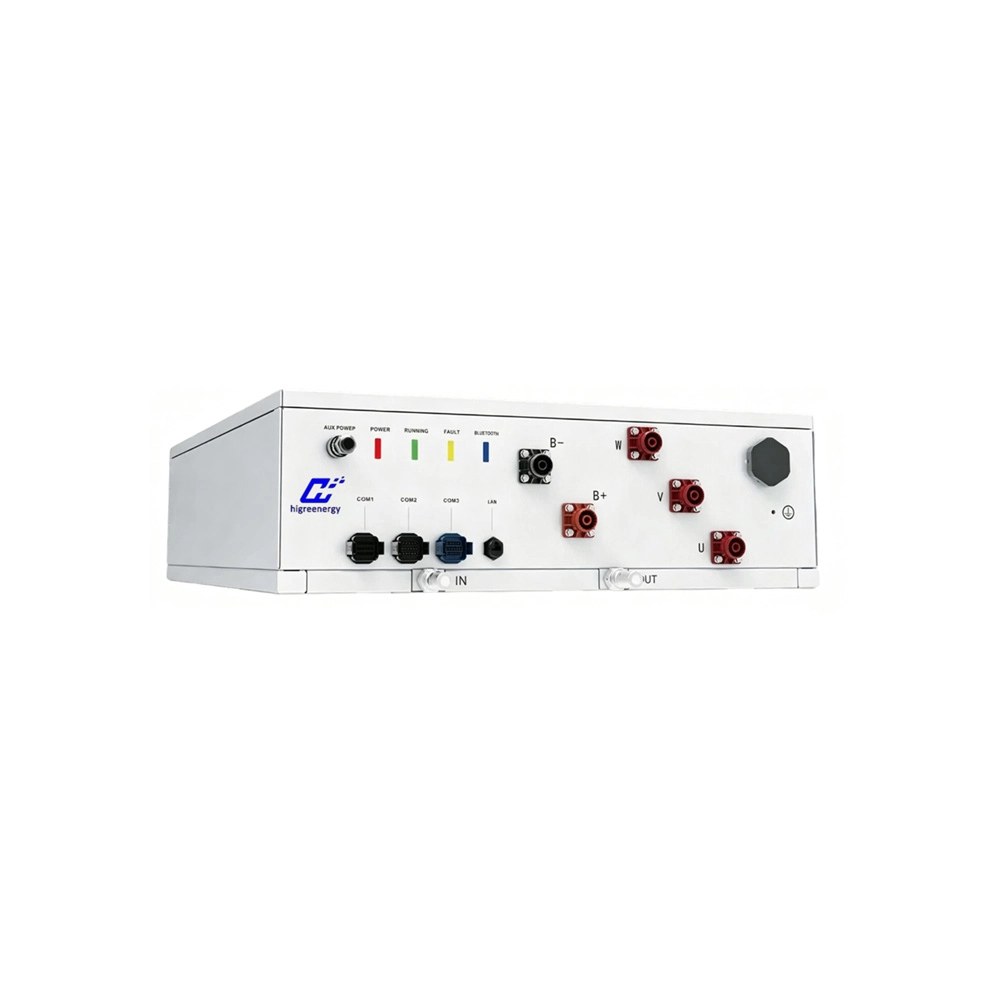
As the demand for high-capacity Energy Storage Systems (ESS) continues to surge, optimizing the performance and longevity of these setups has become a paramount concern for engineers and project managers. At the heart of every ESS is the Power Conversion System (PCS), a critical component responsible for converting direct current (DC) from batteries into alternating current (AC) for the grid, and vice versa. However, this conversion process generates substantial heat. Effective PCS Thermal Management is not just a luxury; it’s a necessity to ensure safety, efficiency, and the long-term viability of the entire energy storage infrastructure.
When it comes to dissipating this heat, the industry primarily relies on two distinct technologies: liquid cooling and air cooling. Choosing between a Liquid-Cooled Power Conversion System and an Air-Cooled Power Conversion System is one of the most critical decisions in the design phase of any large-scale energy project. This comprehensive guide will delve deep into the mechanics, advantages, disadvantages, and ideal use cases for both systems, providing you with the knowledge needed to make an informed decision for your specific application.
How Do They Work?
Before diving into the comparison, it’s essential to understand the fundamental principles behind each cooling method.
The Air-Cooled Approach
An Air-Cooled Power Conversion System relies on the simplest and most traditional method of thermal management: convection. These systems utilize strategically placed fans to draw ambient air from the surrounding environment into the PCS enclosure. The cool air passes over the heat-generating electrical components—such as Insulated-Gate Bipolar Transistors (IGBTs), inductors, and capacitors—absorbing the thermal energy. The now-heated air is then exhausted back out into the environment.
This method is straightforward, utilizing widely available components like fans, heat sinks, and air filters. It’s a proven technology that has been the industry standard for decades, prized for its simplicity and ease of initial installation.
The Liquid-Cooled Approach
In contrast, a Liquid-Cooled Power Conversion System employs a more sophisticated and direct method of heat removal. Instead of relying on ambient air, these systems circulate a specialized coolant—typically a mixture of water and glycol—through a closed-loop network of pipes and cold plates that are in direct or very close contact with the heat-producing components.
The coolant absorbs the heat much more efficiently than air. The heated liquid is then pumped to a heat exchanger or radiator located outside the immediate PCS enclosure, where the heat is released into the atmosphere (often aided by secondary fans). The cooled liquid then returns to the system to repeat the cycle. This method is akin to the cooling system found in modern internal combustion engines or high-performance gaming computers.
Liquid-Cooled vs. Air-Cooled
To make the right choice for your project, a detailed comparison across several key parameters is necessary.
1. Thermal Efficiency and Heat Dissipation
The most significant difference between the two systems lies in their heat transfer capabilities. Liquids, by their physical nature, have a significantly higher specific heat capacity and thermal conductivity than air. This means a liquid coolant can absorb and transport a much larger amount of heat away from the components in a shorter amount of time.
- Air-Cooled: Generally sufficient for lower power densities. However, as the power output of the PCS increases, air cooling can struggle to keep up, potentially leading to hot spots within the enclosure and requiring massive amounts of airflow to maintain safe operating temperatures.
- Liquid-Cooled: Excels in high-power-density applications. The direct contact (via cold plates) and superior heat transfer properties of the liquid ensure uniform cooling, preventing thermal throttling and allowing the PCS components to operate closer to their maximum efficiency even under heavy loads.
2. Footprint and Energy Density
Space is often at a premium in commercial and industrial energy storage deployments.
- Air-Cooled: Because air is a relatively poor conductor of heat, air-cooled systems require large heat sinks and significant internal spacing to allow for adequate airflow. This results in a larger physical footprint for the PCS unit itself.
- Liquid-Cooled: The high efficiency of liquid cooling allows for a much more compact design. The components can be packed closer together, and bulky heat sinks are replaced by slim cold plates. This results in a significantly higher energy density and a smaller overall footprint, which is a major advantage in space-constrained installations.
3. Operating Environment and Ingress Protection
The location of your ESS installation plays a crucial role in determining the appropriate cooling method.
- Air-Cooled: These systems are highly susceptible to the surrounding environment. Because they constantly draw in ambient air, they must also deal with whatever is in that air—dust, moisture, salt, and other particulates. While filters are used, they require regular maintenance and replacement. In a Harsh Environment ESS—such as a coastal area with salt fog, a desert with fine sand, or an industrial site with airborne pollutants—an air-cooled system can degrade quickly if not meticulously maintained. Furthermore, extremely hot ambient temperatures drastically reduce the effectiveness of air cooling.
- Liquid-Cooled: These systems are typically designed as closed loops, meaning the sensitive internal electronics of the PCS can be completely sealed off from the outside environment. This allows for much higher Ingress Protection (IP) ratings (e.g., IP65 or higher). They are essentially immune to dust, moisture, and corrosive elements, making them the superior choice for a Harsh Environment ESS. Additionally, because the heat exchange happens outside the main enclosure, they can maintain internal temperatures more effectively even in very hot climates.
4. Noise Levels
Noise pollution is a growing concern, especially for installations near residential areas or sensitive commercial zones.
- Air-Cooled: To move the necessary volume of air, these systems rely on large, high-speed fans. These fans can generate significant noise, often requiring additional acoustic mitigation measures if strict noise ordinances apply.
- Liquid-Cooled: While they still utilize pumps and fans for the external heat exchanger, the overall noise generated is substantially lower than that of an equivalent air-cooled system. The liquid circulation itself is nearly silent, and the external fans can often run at lower speeds due to the efficiency of the heat exchange process.
5. Maintenance and Operational Costs (OPEX)
While the initial purchase price is a factor, the long-term operational and maintenance costs must be considered.
- Air-Cooled: Maintenance primarily involves replacing air filters and ensuring fans are functioning correctly. However, the parasitic load (the energy required to run the cooling system itself) is generally higher because large fans consume more power than liquid pumps. In dirty environments, the frequency of filter changes increases OPEX.
- Liquid-Cooled: Maintenance involves checking coolant levels, inspecting for leaks, and periodically flushing/replacing the coolant mixture. While these tasks might seem more complex, the overall maintenance intervals are often longer. Furthermore, the lower parasitic load (pumps are typically more energy-efficient than large fans) can lead to significant energy savings over the lifespan of the system, lowering the overall OPEX.
6. Initial Capital Expenditure (CAPEX)
- Air-Cooled: Generally, air-cooled systems have a lower initial upfront cost. The components (fans, heat sinks) are less expensive and the manufacturing process is simpler.
- Liquid-Cooled: The upfront cost is higher due to the complexity of the system (pumps, piping, cold plates, heat exchangers) and the requirement for precision engineering to prevent leaks.
Comparison Table
| Feature | Air-Cooled PCS | Liquid-Cooled PCS |
|---|---|---|
| Cooling Medium | Ambient Air | Coolant (Water/Glycol mix) |
| Heat Transfer Efficiency | Lower | Significantly Higher |
| Footprint/Size | Larger (requires more spacing) | Compact (high energy density) |
| Environmental Tolerance | Low (susceptible to dust/moisture) | High (closed system, ideal for harsh conditions) |
| Noise Level | Higher (large fans) | Lower (quieter pumps, slower fans) |
| Maintenance Needs | Frequent filter changes | Less frequent, but involves fluid checks |
| Parasitic Power Loss | Higher | Lower |
| Initial Cost (CAPEX) | Lower | Higher |
Which is Right for You?
The choice between these two thermal management solutions is rarely a simple “this one is always better.” It requires a careful analysis of your project’s specific requirements.
Choose an Air-Cooled PCS:
- Budget is the primary constraint: If minimizing the initial CAPEX is the absolute highest priority and long-term OPEX is less of a concern.
- The environment is benign: The installation site is clean, dry, and has moderate ambient temperatures (e.g., an indoor climate-controlled facility).
- Space is not an issue: The footprint of the ESS is not restricted, allowing for the larger size of air-cooled units.
- Power density is low to moderate: The system is not expected to operate at peak capacity continuously, generating less intense heat.
Choose a Liquid-Cooled PCS:
- You require maximum efficiency and performance: The system will be operating at high loads frequently, and you need to ensure optimal efficiency and prevent thermal throttling.
- Space is limited: You need to maximize the energy density of your installation in a restricted footprint.
- The installation is in a challenging location: You are deploying a Harsh Environment ESS where dust, salt, extreme heat, or moisture would quickly compromise an open-air system.
- Long-term OPEX is a priority: You are willing to invest more upfront to secure lower parasitic power losses and potentially fewer maintenance interventions over the system’s 10-20 year lifespan.
- Noise restrictions apply: The installation is near residential or noise-sensitive areas.
The Future of PCS Thermal Management
As the energy storage industry continues to mature, the trend is unmistakably shifting towards liquid cooling, especially for utility-scale and large commercial applications. The demand for higher power densities, longer lifespans, and the ability to deploy ESS in increasingly diverse and challenging environments makes the superior heat dissipation and environmental protection of liquid-cooled systems highly attractive.
While air cooling will continue to have a place in smaller, less demanding applications or in highly controlled indoor environments, mastering liquid-based PCS Thermal Management is becoming a prerequisite for developers looking to build robust, high-performance energy storage solutions for the future grid.
FAQs
1. Is there a risk of leaks with a Liquid-Cooled Power Conversion System?
Yes, because it involves circulating fluids, there is always a theoretical risk of a leak. However, modern systems use highly robust, industrial-grade piping, secure fittings, and advanced leak detection sensors. When properly installed and maintained according to manufacturer guidelines, the risk of a catastrophic leak is extremely low. The benefits in thermal performance often outweigh this managed risk for high-power applications.
2. How much more expensive is a liquid-cooled system compared to an air-cooled one?
The exact price difference varies heavily depending on the manufacturer, the scale of the system, and the specific features included. Generally, you can expect the initial capital expenditure (CAPEX) for a liquid-cooled setup to be 15% to 30% higher than a comparable air-cooled unit. However, it’s crucial to calculate the Total Cost of Ownership (TCO), as the lower operational costs (OPEX) and potential for extended component life with liquid cooling can offset the higher initial price over the system’s lifetime.
3. Can I upgrade an existing air-cooled ESS to liquid cooling?
Generally, it is not feasible to retrofit a system designed for air cooling to use liquid cooling. The internal architecture of the PCS is fundamentally different; liquid systems require integrated cold plates directly attached to the components and space for internal plumbing, whereas air-cooled systems are designed around airflow channels. If you determine that your current thermal management is insufficient, you will likely need to replace the entire PCS unit with one designed specifically for liquid cooling.