









How ESS PCS Drives Grid Stability and Revenue
Release time: 2026-07-17
The global transition to renewable energy sources has introduced unprecedented volatility to our power networks. Solar and wind generation, while crucial for a sustainable future, are inherently intermittent. This variability poses a significant challenge to grid operators tasked with maintaining a delicate balance between supply and demand. Enter the Energy Storage System (ESS), a critical component in modernizing infrastructure. However, the battery itself is only half the equation. The true unsung hero, the brain of the operation, is the Power Conversion System. Understanding how ESS PCS operates is fundamental to unlocking both enhanced Energy Storage Grid Stability and maximizing PCS Revenue Generation.
This comprehensive guide explores the multifaceted role of the Power Conversion System, detailing its technical contributions to grid resilience and the strategic pathways it opens for financial return.
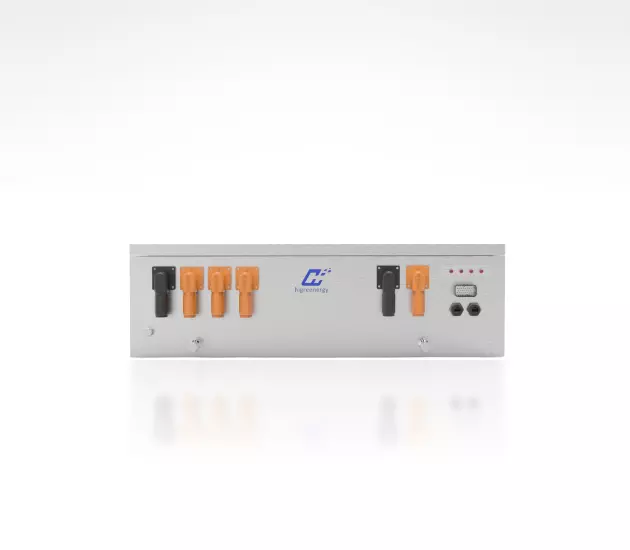
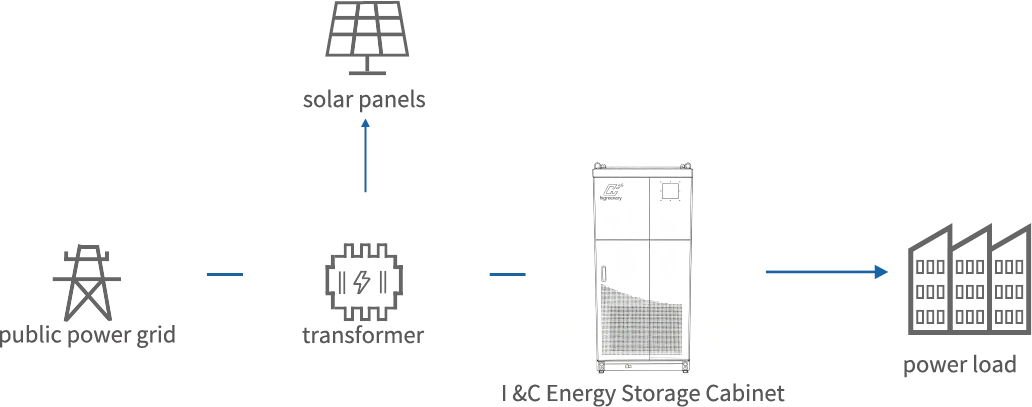
The Function of an ESS PCS
Before diving into its advanced applications, it is essential to understand the fundamental role of a Power Conversion System within an Energy Storage System.
Bidirectional Conversion: The Heart of the System
At its most basic level, the power grid operates on Alternating Current (AC), while battery cells store and release energy as Direct Current (DC). The PCS bridges this gap through bidirectional power conversion.
- Charging Phase: When grid supply exceeds demand (e.g., peak solar noon), the PCS draws AC power from the grid, rectifies it into DC power, and safely charges the battery bank.
- Discharging Phase: When demand peaks or renewable generation drops, the PCS draws DC power from the batteries, inverts it into synchronized AC power, and injects it back into the grid.
Beyond Simple Inversion: The Intelligence Layer
Modern Power Conversion Systems are far more than mere inverters. They are highly intelligent, software-defined power electronics devices. They continuously monitor grid conditions—voltage, frequency, and phase angle—and adjust their output in milliseconds. This real-time responsiveness is what elevates an ESS from a simple backup battery to an active, dynamic grid asset.
The internal architecture typically involves a DC/DC converter to manage battery voltage levels and a DC/AC inverter to interface with the grid, all orchestrated by an advanced control system.
Ensuring Energy Storage Grid Stability
The stability of a power grid relies on maintaining a constant frequency (typically 50Hz or 60Hz, depending on the region) and voltage. Any deviation can lead to equipment damage, localized blackouts, or even cascading grid failures. The PCS provides vital services to maintain this equilibrium.
Frequency Regulation
Frequency fluctuations occur when there is an instantaneous mismatch between power generation and load. If demand suddenly spikes, frequency drops. If generation surges, frequency rises.
- Primary Frequency Response (PFR): Traditional power plants (like coal or gas) provide rotational inertia, acting as a buffer against sudden changes. As inverter-based renewable energy increases, this inertia decreases. The PCS steps in by providing synthetic inertia or fast frequency response (FFR). Within milliseconds of detecting a frequency deviation, the PCS can command the battery to either absorb excess power (if frequency is too high) or discharge power (if frequency is too low), stabilizing the grid faster than traditional spinning reserves.
Voltage Control and Reactive Power Support
Voltage levels must be maintained within tight tolerances across the transmission and distribution network. Real power (measured in Watts) does the actual work, but reactive power (measured in Volt-Amperes Reactive, or VARs) is necessary to maintain voltage levels that allow real power to flow.
- Dynamic Reactive Power: The PCS can independently control its output of real and reactive power. During voltage sags, the PCS injects reactive power to boost voltage. Conversely, during voltage swells, it absorbs reactive power. This capability is crucial at the edges of the grid or near large solar installations where voltage volatility is common. This dynamic support is a key pillar of Energy Storage Grid Stability.
Black Start Capability
In the rare and catastrophic event of a total grid blackout, traditional power plants need external electricity to restart their auxiliary systems before they can begin generating power again.
- Grid-Forming Inverters: Advanced PCS units equipped with grid-forming capabilities can generate their own voltage and frequency reference, effectively starting a “microgrid” from scratch. This allows the ESS to provide the initial power needed to restart larger power plants, significantly reducing the recovery time from a major outage.
Unlocking PCS Revenue Generation
While providing critical stability services is the primary technical function, the financial viability of an ESS project hinges on its ability to generate revenue. The intelligence and agility of the PCS enable participation in a variety of energy markets and grid service programs.
Energy Arbitrage (Time-Shifting)
This is the most straightforward revenue model. The fundamental principle is “buy low, sell high.”
- The Strategy: The PCS charges the batteries during periods of low energy demand when electricity prices are low (often overnight or during peak solar production). It then holds that energy and discharges it back to the grid during peak demand hours when electricity prices are at their highest.
- The Role of the PCS: The efficiency of the PCS directly impacts arbitrage profitability. A higher round-trip efficiency means less energy is lost during the AC-DC-AC conversion process, maximizing the amount of sellable energy.
Ancillary Services Markets
Grid operators compensate asset owners for providing the stability services discussed in Section 2. These markets are often highly lucrative, requiring fast and precise responses.
- Regulation Markets (RegD/RegUp): The PCS responds to continuous, minute-by-minute signals from the grid operator to fine-tune frequency. The speed and accuracy of the PCS determine the compensation level. Systems that can respond in milliseconds earn premium rates.
- Spinning and Non-Spinning Reserves: The ESS acts as a standby resource, ready to discharge significant power within minutes if a major generator trips offline. The reliability of the PCS is paramount here.
Peak Shaving and Demand Response (C&I Applications)
For Commercial and Industrial (C&I) facilities, electricity bills often include high “demand charges” based on their highest single spike in power usage during a billing cycle.
- Peak Shaving: The PCS continuously monitors the facility’s load. When demand approaches the threshold that would trigger a higher demand charge, the PCS discharges battery power to seamlessly offset the load drawn from the grid, effectively “shaving” the peak off the usage profile. This leads to substantial savings, creating a steady stream of indirect PCS Revenue Generation.
- Demand Response Programs: Facilities can also contract with utilities to deliberately reduce their grid draw during critical peak periods in exchange for payment. The PCS automates this process without disrupting operations.
Capacity Markets
In regions with capacity markets, grid operators pay asset owners simply for the promise of being available to discharge power during the highest demand hours of the year. The ESS acts as reliable capacity, replacing the need for expensive and rarely used “peaker” gas plants.
Key Considerations for Selecting a PCS
Maximizing the dual benefits of stability and revenue requires careful selection of the Power Conversion System. Not all units are created equal.
Topology and Architecture
- Central Inverters: A single, large PCS manages the entire battery array. This is often cost-effective for utility-scale projects but offers lower granularity of control. If the central inverter fails, the entire system goes offline.
- String Inverters: Multiple smaller inverters are connected to individual battery racks or strings. This increases fault tolerance and allows for better management of varying battery degradation rates, but often comes at a higher initial capital cost.
Key Performance Indicators (KPIs)
| Feature | Importance for Grid Stability | Importance for Revenue Generation |
|---|---|---|
| Response Time | Critical (needs millisecond response for FFR) | High (determines eligibility for premium ancillary markets) |
| Round-Trip Efficiency | Moderate (reduces thermal load) | Critical (directly impacts arbitrage margins) |
| Reactive Power Capability | Critical (essential for voltage support) | Moderate (some markets compensate for VAR support) |
| Grid-Forming Capability | High (enables black start and microgrid operation) | Emerging (future value in weak grid areas) |
| Software Integrations | High (ensures accurate telemetry with grid operator) | Critical (connects to energy trading platforms/EMS) |
Software and Control Systems (EMS/BMS Integration)
The PCS does not operate in a vacuum. It must seamlessly integrate with the Battery Management System (BMS), which monitors cell health and safety, and the Energy Management System (EMS), which dictates the economic dispatch strategy. A robust, open-protocol software interface on the PCS is essential for executing complex revenue-stacking strategies without violating battery warranty conditions.
The Future – PCS Capabilities
As the energy transition accelerates, the demands placed on the PCS will continue to evolve.
- Artificial Intelligence (AI) and Machine Learning: Future PCS control software will leverage AI to predict grid anomalies before they occur and optimize charging/discharging schedules based on complex weather and market forecasts, further maximizing revenue.
- Grid-Forming as Standard: As rotational inertia continues to decline with the retirement of fossil fuel plants, grid-forming capabilities will transition from a niche feature to a mandatory requirement for all utility-scale ESS PCS deployments.
- Hybridization Integration: We will see PCS units specifically designed to manage complex DC-coupled hybrid systems, simultaneously managing power flows between solar arrays, battery storage, and the grid through a single conversion point, reducing equipment costs and improving efficiency.
Conclusion
The Power Conversion System is the indispensable linchpin of the modern energy storage landscape. It is the active agent that transforms passive battery cells into dynamic assets capable of ensuring critical grid resilience while simultaneously executing sophisticated, profitable market strategies. By understanding the technical nuances and operational capabilities of the PCS, project developers and grid operators can successfully navigate the complexities of the evolving energy market, ensuring both a stable grid and a strong return on investment.
FAQ
1. What is the difference between a grid-following and a grid-forming PCS?
A grid-following PCS relies on the existing grid frequency and voltage to synchronize its output; if the grid goes down, the inverter shuts off. A grid-forming PCS acts as a voltage source, capable of establishing its own frequency and voltage reference. This allows it to operate independently, support weak grids, and provide black-start capabilities during an outage.
2. How does the efficiency of the PCS impact the overall profitability of an energy storage project?
Efficiency is a critical metric. A lower round-trip efficiency means more energy is lost as heat during the conversion process (AC to DC and back to AC). In an energy arbitrage strategy, this means you are selling less energy than you purchased, directly eating into profit margins. High-efficiency PCS units minimize these losses, maximizing the financial return over the project’s lifetime.
3. Can a single PCS perform multiple revenue-generating functions simultaneously?
Yes, this is known as “revenue stacking.” An advanced PCS, controlled by a sophisticated Energy Management System (EMS), can dynamically switch between tasks. For example, it might perform frequency regulation (responding to real-time grid signals) while simultaneously reserving a portion of its capacity to discharge during peak pricing hours for energy arbitrage. The PCS must be capable of precise, rapid power control to execute stacked strategies effectively.